
Monday to Friday: 9:00am - 7:00pm
Saturday: 9:00am - 4:00pm
A shopping cart hits your door.
You slide into a snowbank.
Someone bumps your rear bumper in a parking lot.
Now you’re staring at the damage thinking:
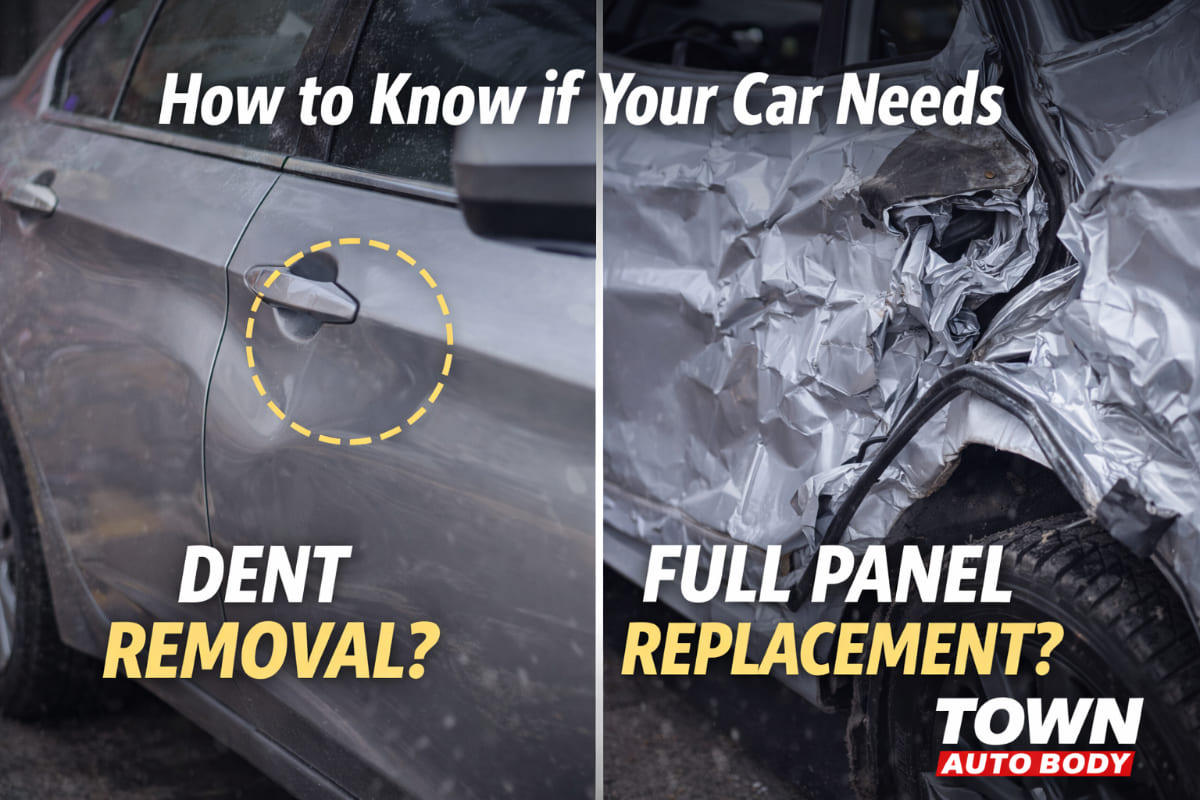
“Is this just a dent… or do I need a full panel replacement?”
For Winnipeg drivers, this is one of the most common auto body questions, especially after winter incidents or tight parking situations. The difference between dent removal and full panel replacement can affect:
- Cost
- Repair time
- Insurance involvement
- Vehicle resale value
- Long-term rust protection
In this complete guide, we’ll break down how to tell the difference, what technicians look for, and what makes the most sense in Manitoba’s harsh climate.
Why This Decision Matters in Winnipeg
Manitoba weather is tough on damaged metal.
Between:
- Road salt
- Freeze-thaw cycles
- Gravel impacts
- Extreme cold
Even small dents can turn into rust problems if handled incorrectly.
According to Transport Canada, corrosion remains one of the leading causes of vehicle body deterioration in cold-weather provinces.
That means choosing the right repair method isn’t just cosmetic, it’s protective.
Part 1: What Is Dent Removal?
Dent removal is typically used when the panel is structurally intact and the paint surface is still usable.
There are two main types:
1️⃣ Paintless Dent Repair (PDR)
This is ideal when:
- The paint is not cracked
- The dent is shallow
- There are no sharp creases
- The metal hasn’t stretched severely
Technicians use specialized tools behind the panel to gently massage the metal back into shape.
Best for:
- Door dings
- Minor hail damage
- Small parking lot dents
2️⃣ Conventional Dent Repair (Fill & Repaint)
Used when:
- Paint is damaged
- The dent is deeper
- Minor stretching occurred
The process involves:
- Pulling the dent
- Applying body filler
- Sanding
- Priming
- Repainting the area
Part 2: What Is Full Panel Replacement?
Panel replacement means the damaged body panel is removed entirely and replaced with a new one.
This is required when:
- Metal is severely crumpled
- There are deep creases
- Structural integrity is compromised
- Rust has started forming
- The repair would exceed panel value
Common panels replaced:
- Bumpers
- Doors
- Fenders
- Quarter panels
- Hoods
Replacement is often necessary after:
- Medium to major collisions
- Wildlife impacts (common in Manitoba)
- Severe winter slide accidents
Key Signs You Only Need Dent Removal
Here’s how to tell your car may only need dent repair:
✅ Paint Is Not Cracked
If the paint surface is intact, PDR may be possible.
✅ Dent Is Smaller Than a Palm
Shallow dents respond well to repair.
✅ No Sharp Crease Lines
Sharp body lines are harder to reshape cleanly.
✅ No Rust Present
Rust changes everything in Manitoba’s climate.
✅ Panel Alignment Is Normal
If doors open and close properly, structural damage is unlikely.
Signs You Likely Need Full Panel Replacement
Now the more serious indicators:
🚩 Paint Is Cracked or Peeling
Once bare metal is exposed, rust risk increases.
🚩 Deep Creases
Metal that has stretched significantly rarely returns perfectly.
🚩 Rust Already Forming
In Winnipeg, rust spreads fast, especially with road salt.
🚩 Structural Impact Behind Panel
If inner reinforcements are bent, replacement is safer.
🚩 Airbags or Sensors Were Triggered
Modern vehicles contain sensors in bumpers and panels.
According to Consumer Reports, improper body repairs can reduce safety performance in future accidents.
👉 https://www.consumerreports.org/cars/
The Manitoba Factor: Why Climate Changes the Decision
Here’s what many drivers don’t realize:
A repair method that works in warmer provinces may not last in Manitoba.
Why?
- Salt penetrates tiny cracks
- Freeze expansion worsens micro fractures
- Gravel chips exposed filler
- Cold temperatures stress paint adhesion
A slightly compromised panel might survive in mild climate, but fail in Winnipeg winters.
This is why professional inspection matters.
Insurance Considerations (MPI)
In Manitoba, collision repairs typically go through Manitoba Public Insurance (MPI).
Insurance assessors evaluate:
- Cost of repair vs replacement
- Safety concerns
- Vehicle age
- Structural integrity
Sometimes, even if a dent could be repaired, panel replacement may be approved if it ensures long-term safety.
Cost Comparison: Dent Removal vs Panel Replacement
Dent Removal (PDR)
- $150 – $600 typical range
- 1–2 days
- No repainting required (if paint intact)
Conventional Dent Repair
- $400 – $1,200
- 2–4 days
- Repaint required
Full Panel Replacement
- $1,000 – $3,500+
- 3–7 days
- Paint blending required
Costs vary depending on vehicle make, model, and damage severity.
Resale Value Considerations
Professional dent repair usually maintains resale value if done properly.
However:
Poorly repaired dents
Uneven filler
Paint mismatch
Visible repair marks
… can reduce resale confidence.
Panel replacement done correctly can restore factory appearance, but only if blended properly.
In Winnipeg’s used vehicle market, appearance strongly influences buyer perception.
Safety First: Modern Vehicles Are Complex
Today’s vehicles contain:
- Blind spot monitors
- Parking sensors
- Backup cameras
- Radar modules
- Lane assist systems
Many of these components sit behind bumpers and panels.
Even a small dent could:
- Displace a sensor
- Affect calibration
- Trigger warning lights
Proper diagnostics are critical before deciding repair vs replacement.
Why DIY Dent Repair Is Risky
DIY kits are widely available, but they rarely consider:
- Metal stretching
- Hidden cracks
- Rust risk
- Paint integrity
- Structural alignment
Small mistakes often lead to larger, more expensive repairs later.
When to Get a Professional Inspection
You should get your vehicle inspected if:
- You see chipped paint
- There is any cracking
- The dent is larger than 2–3 inches
- You feel vibration after impact
- Sensors are malfunctioning
An experienced Winnipeg auto body shop will provide honest advice about the best option.
The Smart Approach for Winnipeg Drivers
Here’s the right way to handle body damage in Manitoba:
- Inspect damage immediately.
- Avoid delaying repair through winter.
- Check for paint cracks.
- Consider rust prevention.
- Get a professional assessment before deciding.
Early action prevents rust spread and structural compromise.
Final Thoughts: It’s Not Just About Appearance
Dent removal is ideal when damage is minor and paint remains intact.
Panel replacement becomes necessary when safety, structure, or rust prevention is at risk.
The key difference is this:
Dent repair restores shape.
Panel replacement restores strength.
In Manitoba’s harsh climate, strength and corrosion protection matter just as much as looks.
Making the right decision protects:
- Vehicle safety
- Long-term durability
- Resale value
- Your peace of mind